
Photo credit: MPW
President Boakai Dedicates Gbarnga–Salayea Road, Breaks Ground for Two New Corridors at Historic Bartuah Ceremony
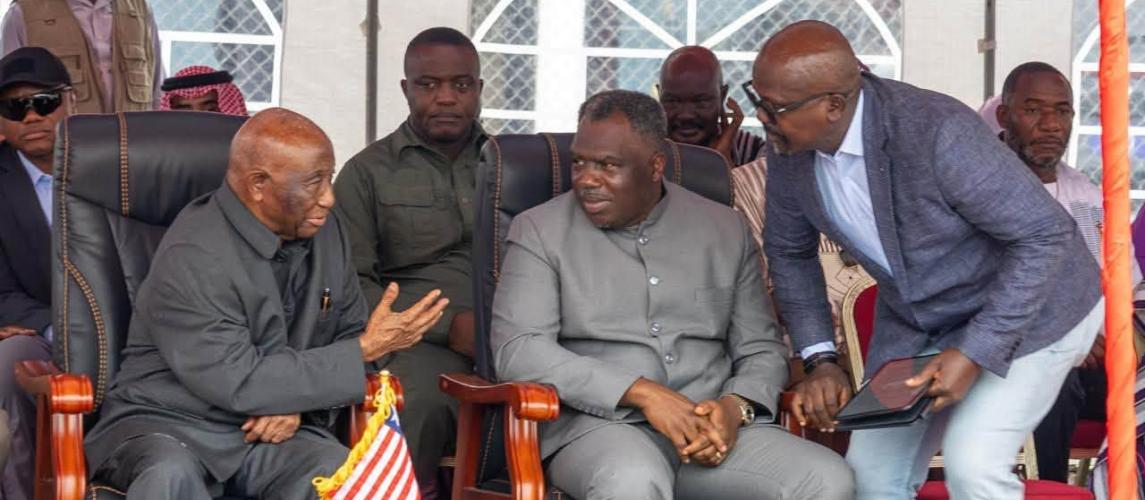
Bartuah, Lofa County - President Joseph Nyumah Boakai on Tuesday formally dedicated the newly completed Gbarnga–Salayea road, marking the end of a construction journey that stretched nearly a decade and tested the patience of communities across Bong and Lofa Counties. At a separate ceremony held at Salayea, President Boakai broke ground on two new road projects: the Salayea–Konia corridor and the Zorzor–Yeala corridor, signaling the government's intent to press forward with expanding the country's road network into Liberia's northern belt.
The dedication drew the Vice President, the Deputy Speaker and Members of the Legislature, representatives of the international financing partners who backed the project, officials of the Ministry of Public Works, and residents from surrounding towns and villages along the corridor who turned out to witness the milestone.
The 81-kilometer road, which is part of the larger Gbarnga–Voinjama–Mendikorma road project, connects Gbarnga in Bong County to Salayea in Lofa County. The contract for the civil works was awarded to China Henan International Cooperation Group (CHICO) after a Letter of Acceptance was issued in mid-December 2017, with the Works Contract signed the following day. Mobilization began in late January 2018, and the project reached effective commencement in June 2018 under an original 36-month timeline that targeted completion by May 2021.
That timeline did not hold. MPW acknowledged that a combination of challenges forced the project's completion date back by roughly five years. The road suffered two suspensions of works, which, in-turn, triggered two rounds of contract extensions.
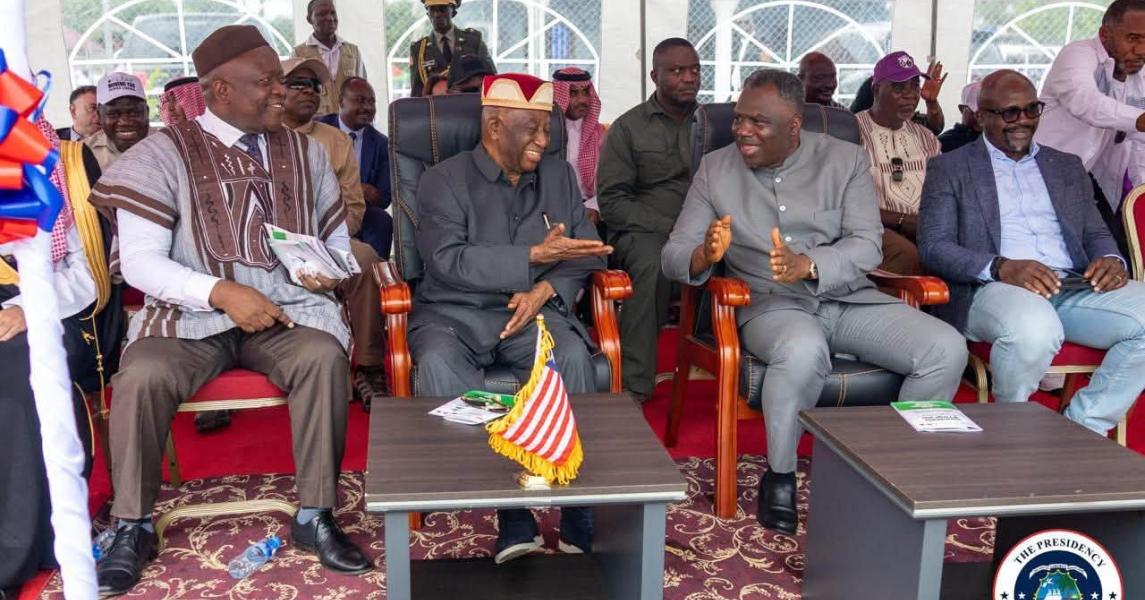
Photo credit: MPW
The first extension, covering 26 months plus a Defects Liability Period, ran from June 2021 through July 2024. A subsequent 20-month extension of time, effective August 2024, carried the contract through March 2026, before a second formal Contract Extension pushed the timeline through March 2027 to accommodate a Defects Liability Period running from April 2026. By July 2026, the project had been under implementation for 99 months; well over eight years from its effective start.
Speaking to the delay, Minister Roland Layfette Giddings pledged that the Ministry of Public Works will work to prevent a similar pattern of repeated extensions on the upcoming Salayea–Konia project.
The financial picture grew alongside the timeline. The contract's value, originally set at roughly US$40.86 million, climbed to approximately US$51.98 million once approved variations of just over US$7 million and the two time extensions were factored in. The related consultancy services contract, covering design review, bidding document preparation, and construction supervision by SaudConsult in partnership with TSC Engineering and Construction Consultants, Inc., also grew to roughly US$3.70 million.
Throughout implementation, the Ministry of Public Works Infrastructure Implementation Unit served as the government's implementing authority, coordinating between the central administration, the consultants, and CHICO as the works contractor.
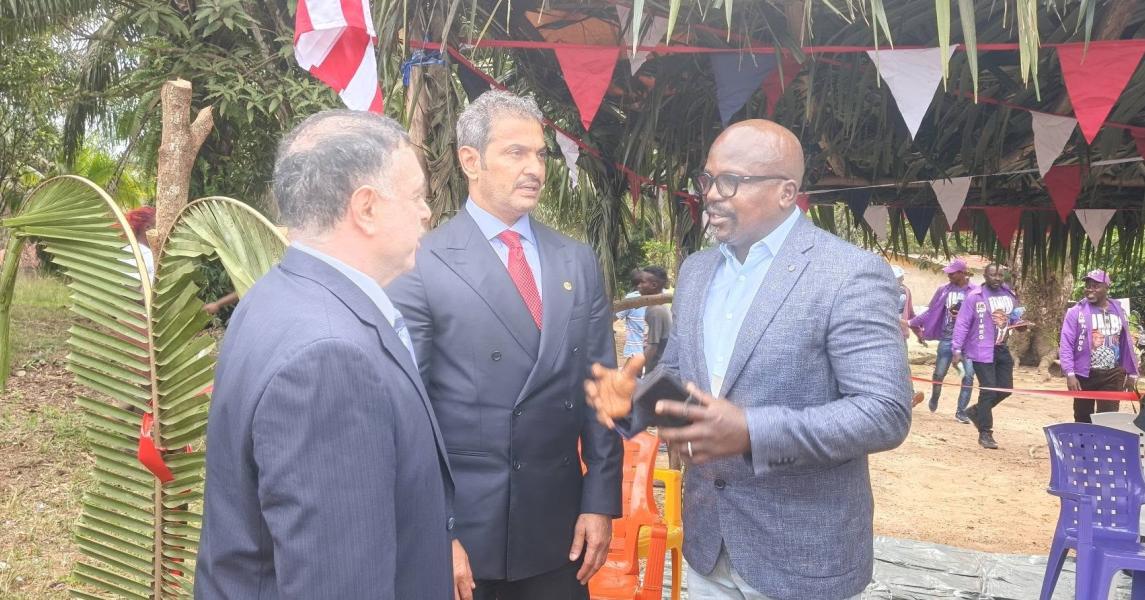
Photo credit: MPW
Much of the ceremony's tone centered on gratitude toward the road's multi-donor financing consortium, whose backing carried the project through years of delay. The financing structure comprised the Arab Bank for Economic Development in Africa (13.34 percent), the Kuwait Fund for Arab Economic Development (24 percent), the OPEC Fund for International Development (31.02 percent), and the Saudi Fund for Development (31.64 percent), with the Government of Liberia contributing counterpart funding that covered resettlement action plan implementation, duty waivers, and other obligations.
Giving Special Remarks, President Joseph Nyumah Boakai averred that the completion of the project represents the Liberian Government's commitment to improving infrastructure. The President cautioned citizens of Bong and Lofa counties to protect the investment in every way possible, adding that infrastructure development is only sustainable when those it affect see the protection of it as a primary responsibility.
In what could be termed as a comprehensive overview of the project, Minister Giddings extended thanks to the visiting delegations representing the financing partners, framing the project as a demonstration of sustained international cooperation with Liberia's road sector; one that endured despite the project's complications and near-decade timeline.
“The pavement itself was built up from an engineered sub-grade, a 250-millimeter granular sub-base, a 200-millimeter crushed-stone base course, and a 50-millimeter asphalt concrete wearing course; a structure designed to withstand projected commercial and passenger traffic volumes, including cross-border freight”, the Minister lamented.
Finance Minister Augustine Kpehe Nganfuan delivered a rather thrilling historical rendition of how the project began in 2010, when he was Minister of Finance during the regime of former President Ellen John-Sirleaf. He furthered that it was President Joseph Nyumah Boakai who handed the Finance Minister's delegation the original design of the road done in 1989, and asked them to take it along hoping that they could secure financing for the project.
Finance Minister Nganfuan disclosed that he was glad to have led the final delegation to Kuwait to resume talks for the partners to return with their support.
The partners expressed appreciation to the Government of Liberia for its demonstrated commitment to infrastructure development. They pledged to continue to work with the Government to connect households with basic social services that are essential to every day life.
